+ Education · January 2026
Organic Content vs. Paid Digital Advertising: Why a Brand Needs Both
Organic content and paid digital advertising serve different purposes: one builds presence, identity, and community; the other distributes content, reaches new audiences, and helps generate more predictable results.
Article
The right question isn't "organic" or "advertising."
For years, the same question has been asked time and again in marketing meetings: Should we focus on organic content or invest in digital advertising? The question is based on a flawed premise, because it assumes that both disciplines are trying to do exactly the same thing. In practice, they serve different functions within the same strategy, and evaluating them as mutually exclusive alternatives often leads to incomplete decisions.
An organic post can help build brand identity, keep a community informed, showcase a brand’s mindset, answer questions, and maintain a presence over time. Paid digital advertising, on the other hand, allows for more precise control over who we want to reach, how much we want to invest, for how long, and what results we want to achieve. These are different capabilities, and in many strategies, they should work together.
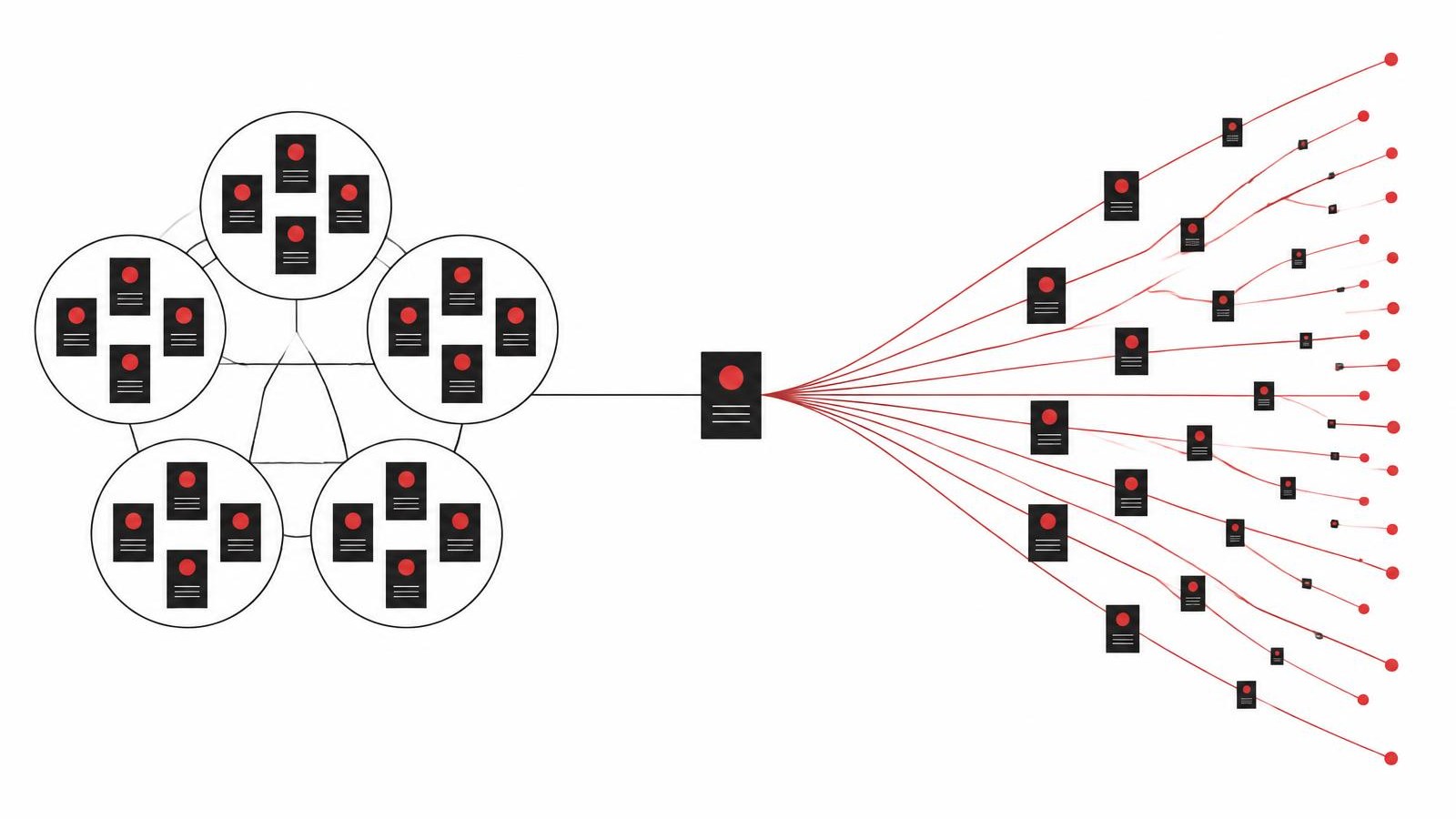
Content builds a presence. Digital advertising helps distribute it.
Two functions. One strategy.
Organic
Paid digital
These aren't two teams competing for the same goal. They are two distinct functions that a strategy can coordinate.
+
Publishing does not mean distributing
One of the major changes in social media is that having followers doesn't guarantee that everyone will see every post. Feeds are ranking systems: each platform decides what content it considers most relevant to each person based on multiple signals related to interest, behavior, and context. That means a brand can invest time and resources in creating an excellent piece of content and still reach only a portion of its potential audience.
Here lies a fundamental difference between content and paid digital media. Content creates the message; advertising helps distribute it strategically. This doesn’t mean that every post needs to be promoted, but it does mean that a content strategy should recognize that creation and distribution are two distinct challenges, each requiring its own resources and decisions. Platforms are structured this way as well: on Meta, a campaign begins by defining an objective before deciding on the audience, budget, and creative direction.
+
Organic content builds something that an ad cannot replace
When someone discovers a brand through an ad, the next step is often to visit its profile or website. What they find there influences their decision: an abandoned account, inconsistent posts, or content from eight months ago convey a very different message than an active presence that shows the company understands its industry and has something to say. That’s a job that advertising alone can’t do.
The feed serves as an extension of the brand’s identity. It can showcase culture, products, services, educational content, case studies, processes, people, and accumulated expertise—and it can do so in a tone that would be difficult to maintain through ads alone. Not all content has to lead to an immediate sale; part of the job is building trust, and trust is rarely earned with a single impression.
+
Digital advertising offers something different: control
Organic reach depends largely on algorithms and user behavior. Digital advertising adds a layer of control over variables that are otherwise beyond our control: budget, audience, market, location, target, time frame, frequency, conversion events, and ad placements. Platforms can use machine learning to optimize many of these variables, but the advertiser continues to define the objective and the budget.
This approach exists on every platform, each with its own terminology. Google Ads organizes the process around objectives and campaign types; TikTok for Business groups its objectives by stage (awareness, consideration, conversion); and LinkedIn structures its campaigns in a similar way based on the desired outcome. The logic is the same: first the objective, then the mechanics.
That's why digital advertising functions less like a "promote" button and more like a strategic distribution tool. When the goal is poorly defined, the platform correctly optimizes toward the wrong result.
+
A major publication may require an investment
There is a common contradiction. A company may invest hundreds or thousands of dollars in photography, design, video, and production, and then rely exclusively on organic reach for anyone to see that content. For some pieces, that may make sense; for others, it means leaving the outcome of a significant investment up to whatever distribution the feed decides to provide.
If a company has devoted resources to developing a major campaign, it should probably also ask itself how much of a budget it needs to distribute it effectively. Creating content and distributing content are two separate investments, and budgeting for only the former is a subtle way of limiting the latter.
Content + Distribution + Data
Content creates the message, digital distribution spreads it further, and data allows us to learn from what happened.
+
Organic farming builds community
One of the strengths of organic content is conversation. Comments, questions, answers, direct messages, reactions, and shared content create an exchange that helps you understand what truly interests your audience and which questions come up time and time again. That insight is hard to glean from a campaign report.
That interaction also helps build a brand identity, something that develops over time through consistency. Digital advertising can amplify a brand very effectively, but it needs something to amplify: a clear value proposition, a recognizable tone, and content that sustains interest after the first click.
+
The ad may reach people who don't know you yet
A natural limitation of organic content is that much of its reach begins with people who already have some connection to the account or whose behavior causes the system to show them the content. Digital advertising can help break out of that cycle and focus on acquisition, not just community building.
Depending on the objective and the capabilities of each platform, a campaign can target new audiences, new markets, people with specific indicators of interest, users who have previously interacted with the content, website visitors, or existing customer lists. Meta documents several of these options within its Custom Audiences, which can be built from first-party sources such as website traffic, video activity, or customer lists—always in accordance with the relevant consent and policies.
The same play. Two performances.
Organic
Posted to the community
Context, identity, comments, questions, and answers. The feed serves as both a presence and a conversation.
Paid digital
Distributed to a specific audience
Objective, budget, market, audience, and measurement. The same idea, aimed at people who may not know us yet.
Creativity can be similar. What changes is the purpose: engaging with the community or reaching a specific audience.
+
Retargeting bridges the two worlds
A person might discover an organic Reel, visit the website a few days later, see an ad later on, return to read an article, and finally fill out a form. Was it organic or paid? The honest answer is usually: both. The customer journey rarely takes place within a single post—or even within a single ad.
That’s why retargeting can serve as the bridge between content, the website, and advertising. Both Google and Meta allow you to build audiences based on previous interactions so you can later display a different message, tailored to another stage of the relationship. Not every ad should speak to a person as if they’ve never heard of the brand before.
Customer journey
The journey may span multiple channels. This rarely happens within a single post or ad.
+
Organic content also shows you what to promote
Another advantage of maintaining organic activity is that it allows you to see what content naturally generates interest. Which questions spark comments, which videos hold viewers’ attention, which topics are shared, and which formats generate conversation—these are insights you can gain without a media budget.
That doesn’t mean organic engagement accurately predicts ad performance; they’re different contexts, and platforms optimize for different goals. But it can yield valuable insights. A post that demonstrates genuine interest can become a candidate for amplification or inspire an entire campaign, and content and media can learn from each other when someone is engaging with both at the same time.
+
Not all content should become an ad
It’s also important to avoid going to the other extreme. Not every post needs a budget: there’s content whose main purpose is to inform, document, celebrate, educate, showcase culture, answer questions, or foster a sense of community. Forcing a conversion goal onto every piece of content can turn a brand’s social media into a permanent sales catalog.
People don't go on social media just to see ads, and an account that only sells exhausts the attention it needs to make sales. A sound strategy assigns different functions to different types of content and recognizes that some pieces work over the long term.
+
A creative brief doesn't fix poor creativity either
Investing more money in a weak campaign doesn't automatically make it a good one. Digital advertising increases reach, and that reach also amplifies problems: a confusing message reaches more people, a hard-to-read design gets more impressions, a weak offer receives more traffic, and a poor landing page gets more clicks.
Paid media requires quality content, a clear value proposition, and a good post-click experience. That’s why the website is part of the advertising effort and not a separate conversation. Distribution does not replace strategy.
+
Organic and paid should be part of the same strategy
One problem we often see is that social media and digital advertising are managed as two completely separate departments. One team produces content, another buys media, and there isn’t always enough communication between the two. Each team optimizes its own metrics, and the brand ends up with two incomplete strategies.
They should share information. The content team knows which topics generate engagement; the media team knows which pieces drive conversions; analytics can show what happens after the click; and sales can identify which leads are truly high-quality. When these insights feed back into the creative process, the strategy improves cumulatively.
+
The funnel isn't a straight line
One person might see an ad, ignore it, come across an organic post two weeks later, visit the website, read reviews, and return via a Google search. Another might first discover the brand through content and convert later through retargeting. The reality of digital behavior is far less orderly than traditional funnel diagrams.
That’s why organic content and paid media can play a role at different stages of the customer journey, and why trying to attribute all the influence to a single touchpoint often skews the results. Our article on metrics and KPIs explains how to link metrics to real business objectives, and our article on first-party data discusses how to organize the proprietary data that fuels that measurement.
+
How much should we post, and how much should we invest?
There is no one-size-fits-all formula. The answer depends on the objective, the industry, the audience, the market, production resources, the available budget, the platform, and the buying cycle. A local business and a national brand do not need the same strategy, nor do a university, a restaurant, a B2B manufacturer, and an e-commerce business.
The conversation shouldn't start with "we have to post five times a week," but rather with a more uncomfortable—and more useful—question: What are we trying to achieve? From there, we can decide how much content is needed, which pieces are worth sharing, and what portion of the budget should go toward media.
What are we trying to achieve?
+
Strategy Over Schedule
Content calendars are useful and help maintain consistency, but a full calendar doesn’t automatically equate to a strategy. A brand can post every day and still lack clarity on who it’s speaking to, what it wants to communicate, what goal it’s pursuing, what content deserves paid distribution, what metrics matter, and how social media connects to the business.
Quantity and strategy are not synonymous. Strategic consulting often begins precisely there: by prioritizing objectives before organizing publications.
+
Our Approach at Alterno
At Alterno, we view social media as an ecosystem. Content, community management, creativity, digital advertising, retargeting, websites, analytics, and strategy must all work together, with information flowing freely between them. Organic content helps build a presence and relationships; digital media helps distribute, amplify, and identify opportunities; remarketing allows us to continue conversations; and analytics helps us learn.
That's why we don't think the right question is "organic content or digital advertising?" The question should be: What role should each play in achieving the brand's goal? Once that answer is clear, organic and paid content stop competing and start working together.
Let's talk
Content sparks the conversation. Media helps take it further.
At Alterno, we integrate strategy, content, social media, and digital advertising to build a presence and deliver messages to the audiences that truly matter.
LET'S TALKConversation +
Comments.
0 published
Your input helps this conversation grow. Share your comments, questions, or experiences related to this article—we're here to listen.
Be the first to comment.

+ Ideas That Keep Moving Forward
Get the next article.
Creativity, marketing, digital advertising, technology, and artificial intelligence—delivered straight to your inbox.
Tags
Topics in this article.
Continue reading
More from the blog.
Education · June 2025
Retargeting: Strategy and Psychology for Greater Impact
Retargeting is key to staying top-of-mind with consumers. We explain how it works, why it’s effective, and how user psychology plays an essential role in achieving results without making your brand seem intrusive.
Read the article +Education · April 2026
First-party data: Why data from your own customers is becoming increasingly important
What is first-party data, and why does connecting your CRM, websites, forms, purchases, and first-party data help improve measurement, audience targeting, and marketing decisions?
Read the article +Education · May 2026
AI in Meta Ads and Google Ads: The New Era of Media Planning and Optimization
How Artificial Intelligence Is Transforming Media Planning, Buying, and Optimization in Meta Ads and Google Ads.
Read the article +
Let's get to work